The examples were written for this course. Usage was checked against Matt Errey’s book, pages 73, 102, 121, 120, 110. A2–B1 is the course’s intended level.
Recall it · Use it
One step forward every day
Practice completed!
Your browser could not save your play history. Results from this session may be lost when you close the page.
Sentences using suggestions are counted as needing more practice. Review schedule based on each phrase's meaning.
Drag a wire from the dot beside a phrase to the dot beside its matching picture. You can also tap a phrase, then a picture. Drag again to change a pair before checking.
Read the picture descriptions for more context. Similar expressions are accepted when they fit the particular scene.
Phrases
Actions in the pictures
Picture description
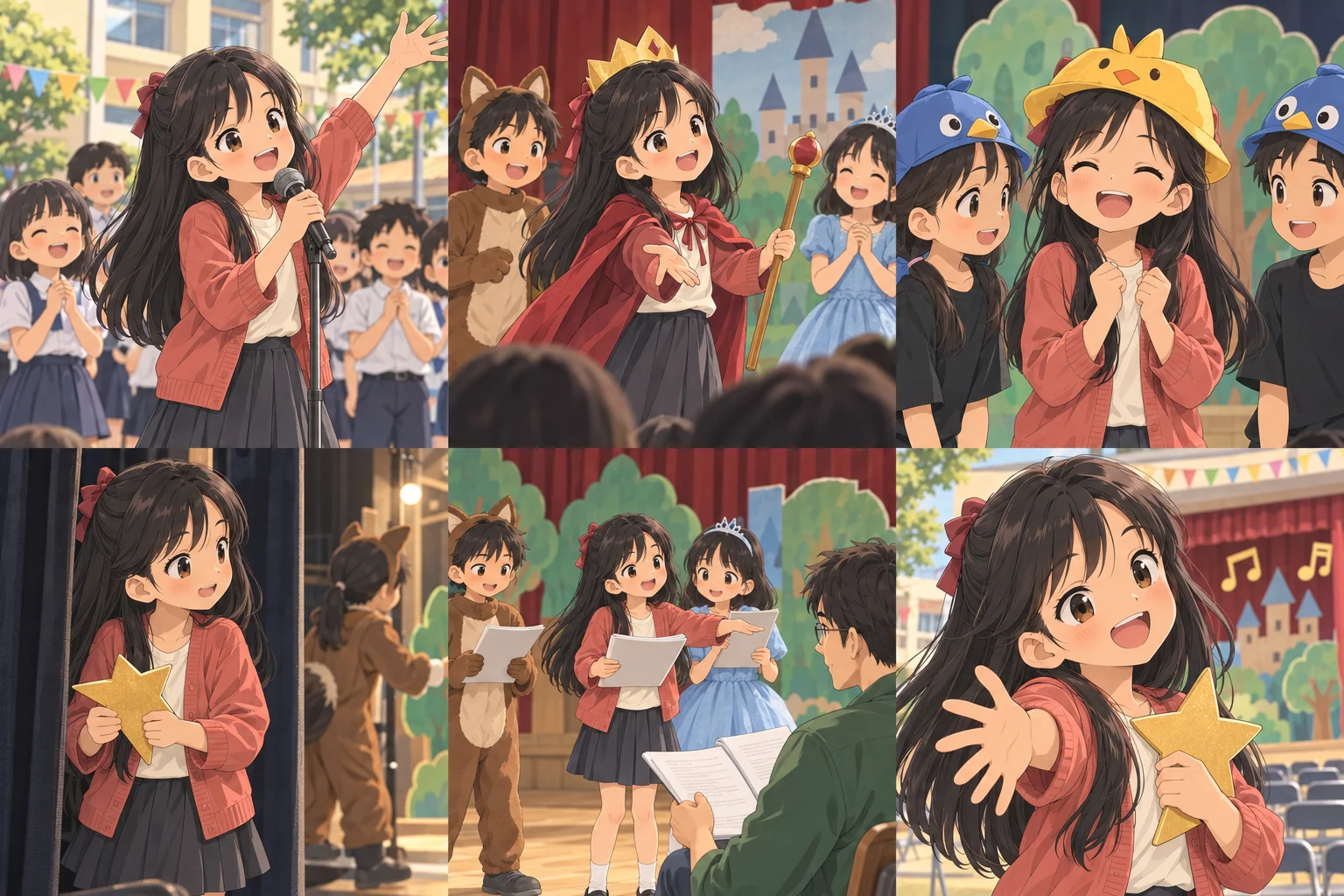
Vy and her friends opened the schoolyard activity.
The picture could not load. Try loading it again before matching.
Picture description
Vy and her friends performed a short play on the classroom stage.
The picture could not load. Try loading it again before matching.
Picture description
Vy wearing a yellow hat stands out among her friends with green hats.
The picture could not load. Try loading it again before matching.
Picture description
Vy waiting on the side of the stage, holding props ready to give to you.
The picture could not load. Try loading it again before matching.
Picture description
Vy and her group rehearsed the entire play before performing.
The picture could not load. Try loading it again before matching.
Choose a phrase to begin.
Your browser could not save your play history. Results from this session may be lost when you close the page.
A conversation in context
Read the conversation and find the expressions you have learned.
Mai
What time does the show kick off?
Read the example again
What time does the show kick off?
Alex
At seven. Let us run through the final scene once more.
Read the example again
At seven. Let us run through the final scene once more.
Mai
I will stand by in case you need help.
Read the example again
I will stand by in case you need help.
Compare the uses
kick off / run through
“Kick off” begins an event; “run through” means review or rehearse it quickly. A rehearsal can happen before the actual event starts.
Practice and check your answers
Try answering before revealing the suggested answer. This practice is not scored.
The answers below are models. Other answers can also work if they preserve the facts, meaning and structure requested in the task.
A situation to apply what you have learned
A school performance begins at six. Before that, actors practise the closing scene while helpers remain ready.
Describe the performance’s start.
Show the answer and explanation
The performance kicks off at six.
Six is the performance start time: “kicks off at six”, rather than the rehearsal time.
Complete: Let us run ___ the closing scene once more.
Show the answer and explanation
through
“Run through the closing scene” means rehearse it once, rather than run across the stage.
Ask a helper to remain ready.
Show the answer and explanation
Please stand by in case we need another microphone.
“Stand by in case” asks the helper to remain ready if another microphone is needed, without starting a specific task yet.
The usage comparisons are checked against the Cambridge Dictionary entries linked beside the compared expressions. The additional conversations and exercises are written for this course.
Progress is saved on the device. Sign in with Google to save with the same account and continue on another device.