Bảo read a story with Minh for a while before going to bed.
stay up
We stayed up a little later to read with Dad.
Read the example again
We stayed up a little later to read with Dad.
I do not usually stay up late on school nights.
Read the example again
I do not usually stay up late on school nights.
View meaning & usage
Awake, not yet asleep
stay upstay up late
Use before going to bed even though it is at or near bedtime; don't have to stand up.
Haven't studied yet
The examples were written for this course. Usage was checked against Matt Errey’s book, pages 55, 81, 94, 123, 122. A2–B1 is the course’s intended level.
Recall it · Use it
One step forward every day
Practice completed!
Your browser could not save your play history. Results from this session may be lost when you close the page.
Sentences using suggestions are counted as needing more practice. Review schedule based on each phrase's meaning.
Drag a wire from the dot beside a phrase to the dot beside its matching picture. You can also tap a phrase, then a picture. Drag again to change a pair before checking.
Read the picture descriptions for more context. Similar expressions are accepted when they fit the particular scene.
Phrases
Actions in the pictures
Picture description
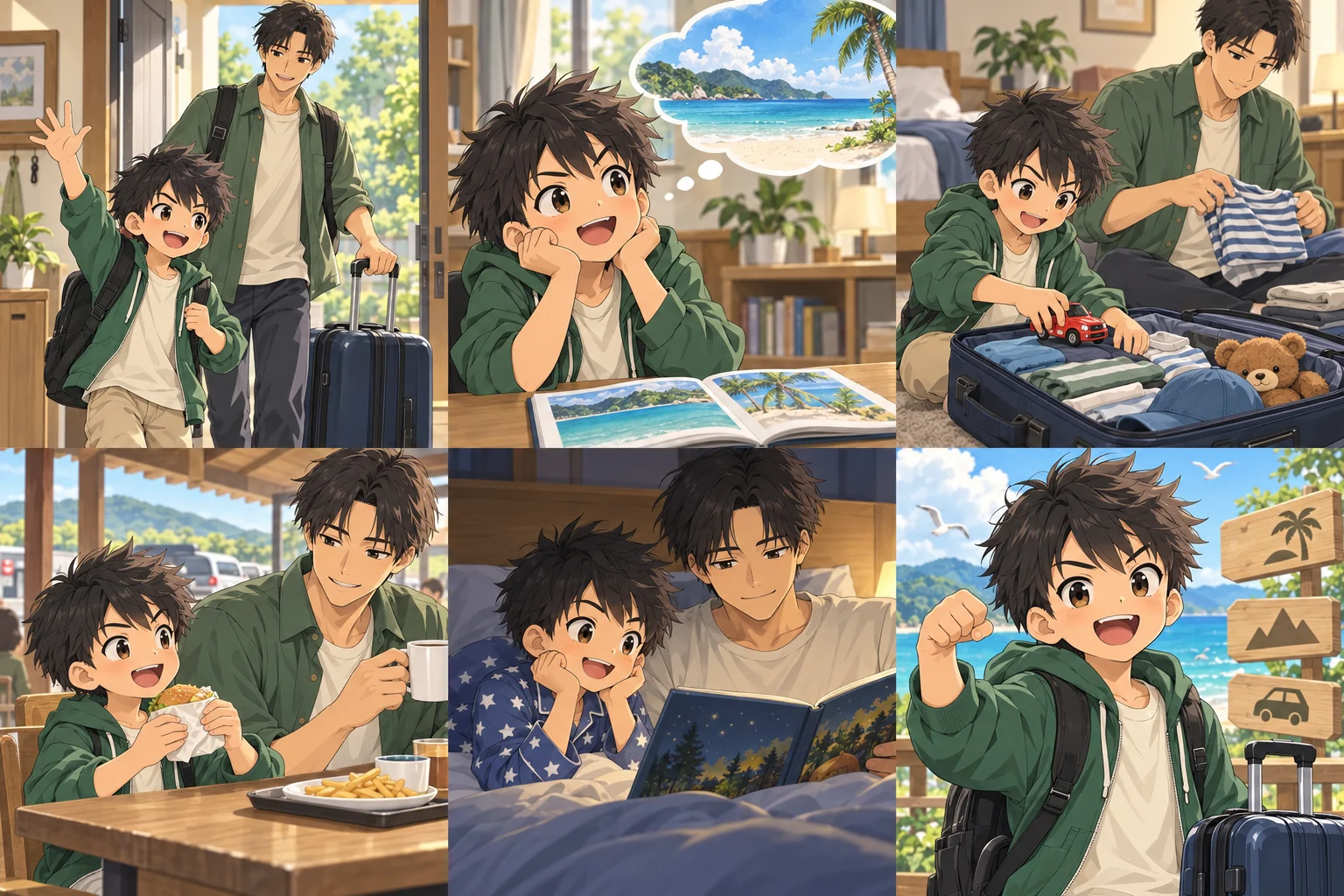
Bảo and Minh carried suitcases and left home for a vacation.
The picture could not load. Try loading it again before matching.
Picture description
Bảo eagerly thought about the upcoming trip to the beach.
The picture could not load. Try loading it again before matching.
Picture description
Bảo and Minh packed clothes and toys into a bag.
The picture could not load. Try loading it again before matching.
Picture description
Bảo's family stopped by a small restaurant to rest for a while on the journey.
The picture could not load. Try loading it again before matching.
Picture description
Bảo read a story with Minh for a while before going to bed.
The picture could not load. Try loading it again before matching.
Choose a phrase to begin.
Your browser could not save your play history. Results from this session may be lost when you close the page.
A conversation in context
Read the conversation and find the expressions you have learned.
Mai
Have you packed up everything for the trip?
Read the example again
Have you packed up everything for the trip?
Alex
Yes. Can we stop off at the lake on the way?
Read the example again
Yes. Can we stop off at the lake on the way?
Mai
Certainly. I am looking forward to spending time there.
Read the example again
Certainly. I am looking forward to spending time there.
Compare the uses
pack up / stop off
“Pack up” means gather belongings or finish an activity; “stop off” means make a visit during a journey. One concerns preparation, the other a stop en route.
Practice and check your answers
Try answering before revealing the suggested answer. This practice is not scored.
The answers below are models. Other answers can also work if they preserve the facts, meaning and structure requested in the task.
A situation to apply what you have learned
Campers are gathering their belongings. They want a short visit to a waterfall during the drive home.
What do they do with their belongings?
Show the answer and explanation
They pack up their belongings before leaving.
The campers gather and pack their possessions before leaving, so they “pack up their belongings”.
Complete: We can stop ___ at the waterfall.
Show the answer and explanation
off
A short waterfall visit during the journey is “stop off at”; “off” does not end the whole trip.
Write one sentence expressing anticipation.
Show the answer and explanation
I am looking forward to visiting the waterfall on our journey home.
“Look forward to” takes “visiting” because “to” is a preposition; the anticipated event is the waterfall visit.
The usage comparisons are checked against the Cambridge Dictionary entries linked beside the compared expressions. The additional conversations and exercises are written for this course.
Progress is saved on the device. Sign in with Google to save with the same account and continue on another device.