Mây takes care of the baby and holds the baby's hand while playing.
look after
Can you look after the children for an hour?
Read the example again
Can you look after the children for an hour?
I look after the plants next door when my neighbours travel.
Read the example again
I look after the plants next door when my neighbours travel.
View meaning & usage
Look after / care for
look after someone / something
Do not separate the phrase: “look after them”. Use on people, pets or items that need care.
Haven't studied yet
Family members gather around a table to share a meal.
get together
Our family gets together every New Year.
Read the example again
Our family gets together every New Year.
Let us get together for lunch next week.
Read the example again
Let us get together for lunch next week.
View meaning & usage
Gather / meet
get togetherget together with someoneget together for a meal
Emphasis on people meeting at the same time, usually to chat or do an activity.
Haven't studied yet
Mây received help from her trusted relatives while carrying a heavy box.
count on
You can count on me if you need help.
Read the example again
You can count on me if you need help.
I count on my brother to pick me up on time.
Read the example again
I count on my brother to pick me up on time.
View meaning & usage
Trust / rely on
count on someone / somethingcount on someone to do something
Here it means believing that that person or thing is trustworthy, not counting by numbers.
Haven't studied yet
The examples were written for this course. Usage was checked against Matt Errey’s book, pages 58, 15, 81, 53, 29. A2–B1 is the course’s intended level.
Recall it · Use it
One step forward every day
Practice completed!
Your browser could not save your play history. Results from this session may be lost when you close the page.
Sentences using suggestions are counted as needing more practice. Review schedule based on each phrase's meaning.
Drag a wire from the dot beside a phrase to the dot beside its matching picture. You can also tap a phrase, then a picture. Drag again to change a pair before checking.
Read the picture descriptions for more context. Similar expressions are accepted when they fit the particular scene.
Phrases
Actions in the pictures
Picture description
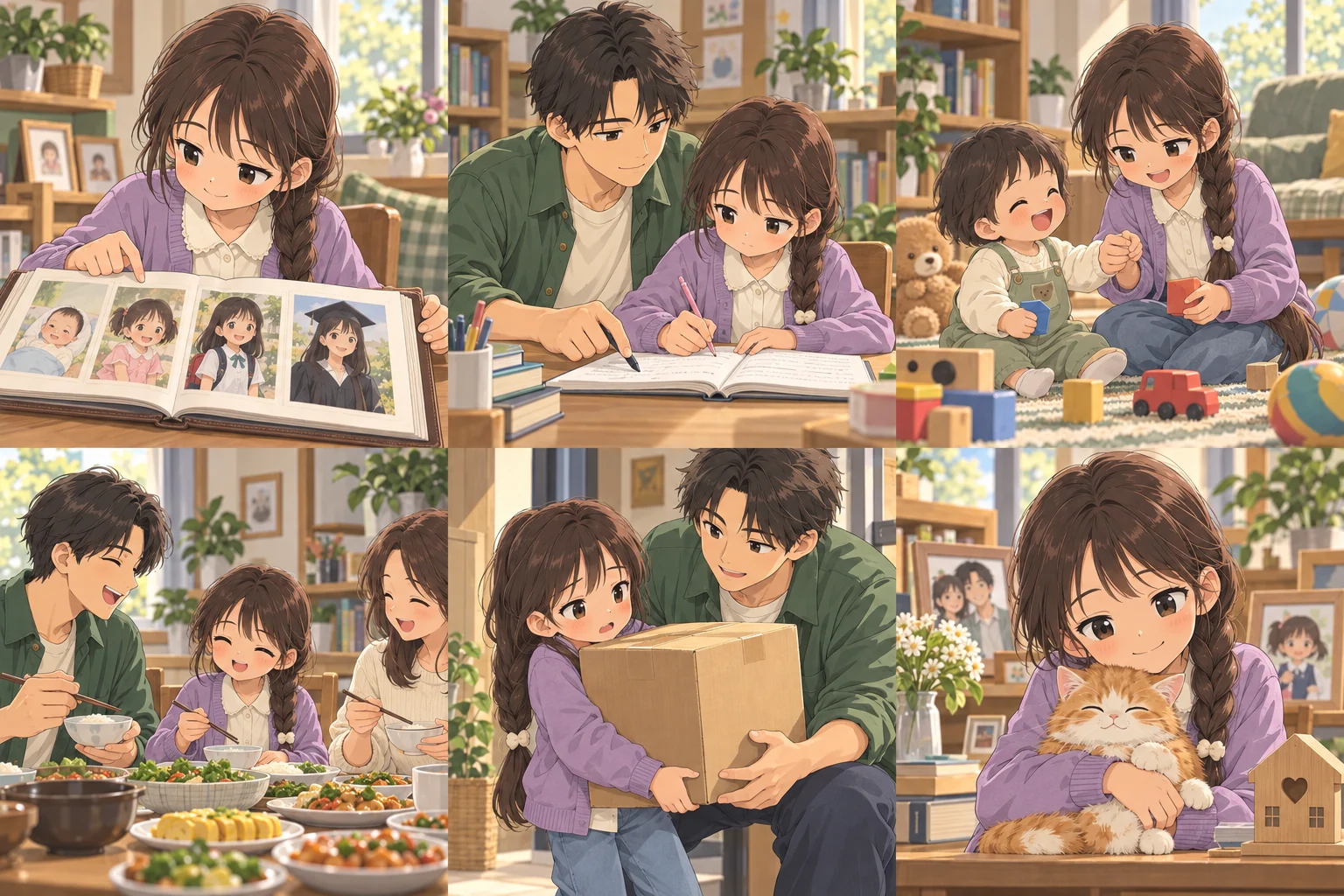
Mây looks at an album with pictures showing a child gradually growing into an adult.
The picture could not load. Try loading it again before matching.
Picture description
Minh cares for Mây and helps her with homework at home, showing an adult bringing up a child.
The picture could not load. Try loading it again before matching.
Picture description
Mây takes care of the baby and holds the baby's hand while playing.
The picture could not load. Try loading it again before matching.
Picture description
Family members gather around a table to share a meal.
The picture could not load. Try loading it again before matching.
Picture description
Mây received help from her trusted relatives while carrying a heavy box.
The picture could not load. Try loading it again before matching.
Choose a phrase to begin.
Your browser could not save your play history. Results from this session may be lost when you close the page.
A conversation in context
Read the conversation and find the expressions you have learned.
Mai
Did you grow up near your grandparents?
Read the example again
Did you grow up near your grandparents?
Alex
Yes. They helped bring me up while my parents worked.
Read the example again
Yes. They helped bring me up while my parents worked.
Mai
It is lovely that you still get together every month.
Read the example again
It is lovely that you still get together every month.
Compare the uses
grow up / bring up
“Grow up” describes a person becoming older; “bring up” describes someone raising that person. Choose the subject according to what you want to emphasise.
Practice and check your answers
Try answering before revealing the suggested answer. This practice is not scored.
The answers below are models. Other answers can also work if they preserve the facts, meaning and structure requested in the task.
A situation to apply what you have learned
A woman spent her childhood by the sea. Her uncle and aunt raised her there.
Describe her childhood place using grow up.
Show the answer and explanation
She grew up by the sea.
The woman is the person who grew up, so say “she grew up”; “grew” is the past of “grow”.
Correct: Her aunt brought up her there.
Show the answer and explanation
Her aunt brought her up there.
“Her” is the child being raised and goes between “brought” and “up”, not after the whole expression.
Write one sentence distinguishing the two perspectives.
Show the answer and explanation
She grew up by the sea, where her aunt helped bring her up.
“She grew up” makes the child the subject; the aunt is the person who helped “bring her up”.
The usage comparisons are checked against the Cambridge Dictionary entries linked beside the compared expressions. The additional conversations and exercises are written for this course.
Progress is saved on the device. Sign in with Google to save with the same account and continue on another device.