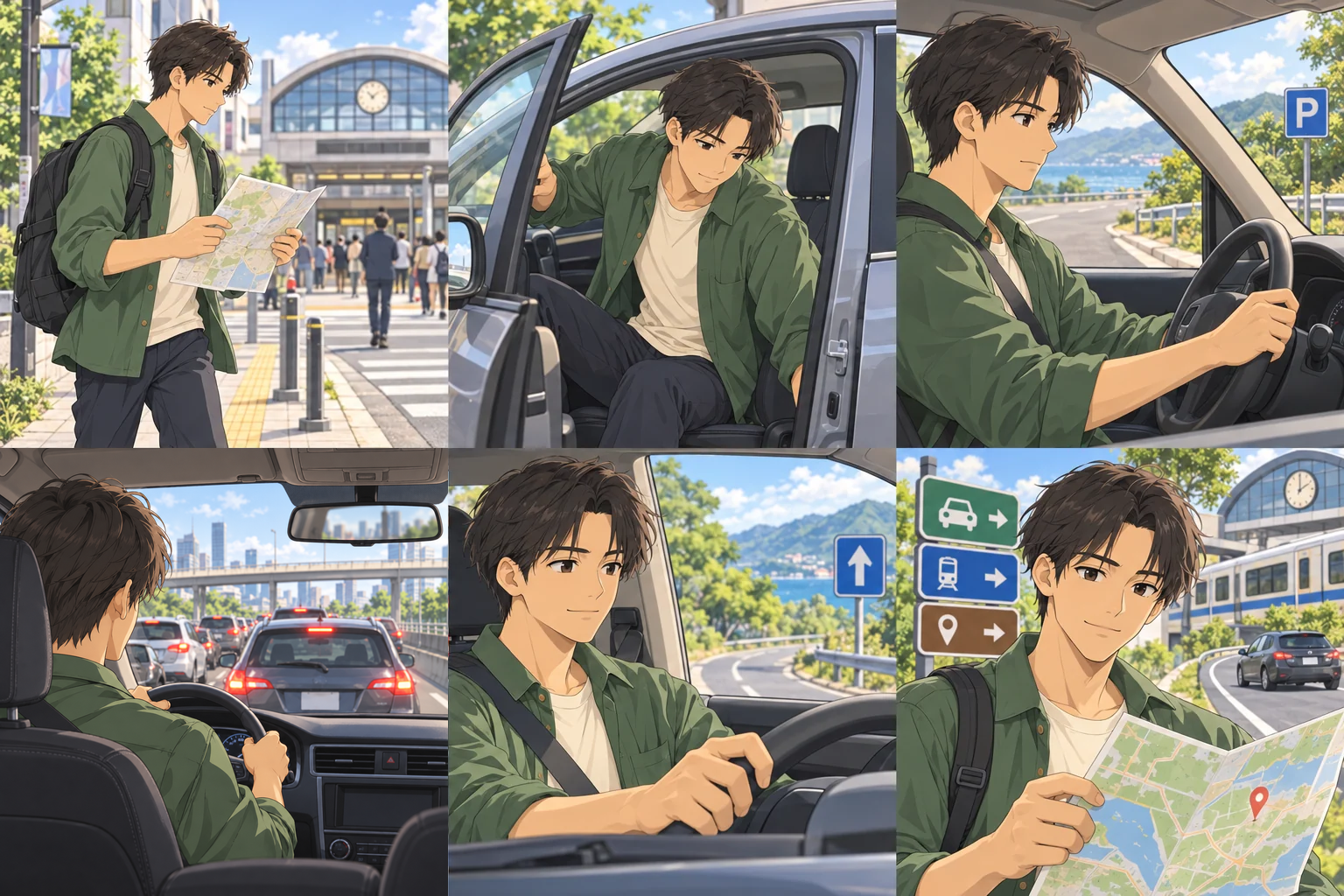
After resting at one stop, Minh continued to the next stop.
move on
We have seen this part of the museum. Let us move on.
Read the example again
We have seen this part of the museum. Let us move on.
Can we move on to the next question?
Read the example again
Can we move on to the next question?
View meaning & usage
Move on to the next task / stage
move onmove on to something
Emphasis on leaving the current job or stage to move on to another job.
Haven't studied yet
The examples were written for this course. Usage was checked against Matt Errey’s book, pages 62, 51, 100, 64, 88. A2–B1 is the course’s intended level.
Recall it · Use it
One step forward every day
Practice completed!
Your browser could not save your play history. Results from this session may be lost when you close the page.
Sentences using suggestions are counted as needing more practice. Review schedule based on each phrase's meaning.
Drag a wire from the dot beside a phrase to the dot beside its matching picture. You can also tap a phrase, then a picture. Drag again to change a pair before checking.
Read the picture descriptions for more context. Similar expressions are accepted when they fit the particular scene.
Phrases
Actions in the pictures
Picture description
Minh took the map and walked towards the station at the end of the street.
The picture could not load. Try loading it again before matching.
Picture description
Minh opened the door and sat in the front seat of a car.
The picture could not load. Try loading it again before matching.
Picture description
Minh drove the car to a stop on the side of the road.
The picture could not load. Try loading it again before matching.
Picture description
Seen from the back seat, Minh sits at the wheel and looks through the front windshield at the stopped traffic ahead.
The picture could not load. Try loading it again before matching.
Picture description
After resting at one stop, Minh continued to the next stop.
The picture could not load. Try loading it again before matching.
Choose a phrase to begin.
Your browser could not save your play history. Results from this session may be lost when you close the page.
A conversation in context
Read the conversation and find the expressions you have learned.
Mai
Please pull over when you find a safe place.
Read the example again
Please pull over when you find a safe place.
Alex
Are we heading for the wrong station?
Read the example again
Are we heading for the wrong station?
Mai
No, but the roadworks may hold us up.
Read the example again
No, but the roadworks may hold us up.
Compare the uses
pull over / hold up
“Pull over” means move a vehicle to the side and stop; “hold up” here means delay someone. Stopping may cause a delay, but the expressions describe different events.
Practice and check your answers
Try answering before revealing the suggested answer. This practice is not scored.
The answers below are models. Other answers can also work if they preserve the facts, meaning and structure requested in the task.
A situation to apply what you have learned
A driver needs to read a map safely. Road repairs ahead may delay the journey.
Give an instruction about stopping safely.
Show the answer and explanation
Pull over somewhere safe before reading the map.
The driver should read the map after stopping at a safe roadside place; “pull over” means more than slowing down.
Correct: The roadworks held up us yesterday.
Show the answer and explanation
The roadworks held us up yesterday.
“Us” is the group delayed by roadworks, so use “held us up”; keep past-tense “held”.
Explain why arrival may be late.
Show the answer and explanation
The road repairs may hold us up on the way.
“May hold us up” expresses a possible roadwork delay, rather than certainty that arrival will be late.
The usage comparisons are checked against the Cambridge Dictionary entries linked beside the compared expressions. The additional conversations and exercises are written for this course.
Progress is saved on the device. Sign in with Google to save with the same account and continue on another device.