The examples were written for this course. Usage was checked against Matt Errey’s book, pages 137, 140, 28, 118, 121. A2–B1 is the course’s intended level.
Recall it · Use it
One step forward every day
Practice completed!
Your browser could not save your play history. Results from this session may be lost when you close the page.
Sentences using suggestions are counted as needing more practice. Review schedule based on each phrase's meaning.
Drag a wire from the dot beside a phrase to the dot beside its matching picture. You can also tap a phrase, then a picture. Drag again to change a pair before checking.
Read the picture descriptions for more context. Similar expressions are accepted when they fit the particular scene.
Phrases
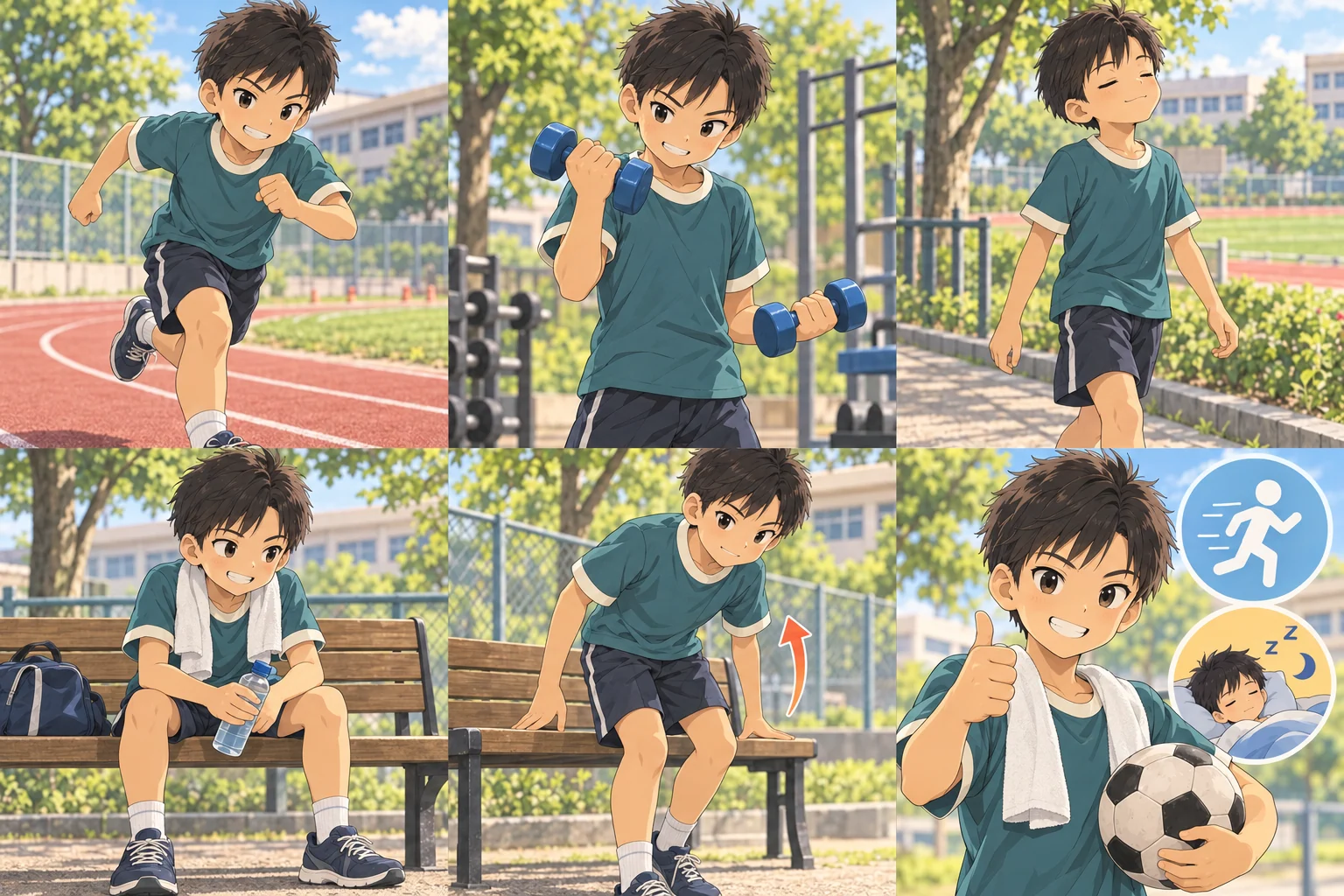
Actions in the pictures
Picture description
Nam ran lightly to warm up before practicing.
The picture could not load. Try loading it again before matching.
Picture description
Nam exercises with two light dumbbells.
The picture could not load. Try loading it again before matching.
Picture description
After running, Nam walked lightly and relaxed to calm his body.
The picture could not load. Try loading it again before matching.
Picture description
Nam sat down on the bench after practicing.
The picture could not load. Try loading it again before matching.
Picture description
Nam stood up from a chair to begin the activity.
The picture could not load. Try loading it again before matching.
Choose a phrase to begin.
Your browser could not save your play history. Results from this session may be lost when you close the page.
A conversation in context
Read the conversation and find the expressions you have learned.
Mai
Shall we warm up before the main exercises?
Read the example again
Shall we warm up before the main exercises?
Alex
Yes. After we work out, let us cool down slowly.
Read the example again
Yes. After we work out, let us cool down slowly.
Mai
Then we can sit down and rest for a moment.
Read the example again
Then we can sit down and rest for a moment.
Compare the uses
warm up / cool down
In exercise, “warm up” prepares you with gentle movement before harder activity; “cool down” follows it with gentler movement. They belong at different stages.
Practice and check your answers
Try answering before revealing the suggested answer. This practice is not scored.
The answers below are models. Other answers can also work if they preserve the facts, meaning and structure requested in the task.
A situation to apply what you have learned
A dance class is about to begin. The instructor also plans gentle movements after the hardest exercises.
What preparation should happen first?
Show the answer and explanation
The dancers should warm up before the harder exercises.
Before strenuous exercise the dancers need to warm up, unlike cooling down at the end.
Complete: After the session, we need to cool ___.
Show the answer and explanation
down
“After the session” places the action at the end, so “cool down” describes the gentle finishing activity.
Write a reminder about both ends of the session.
Show the answer and explanation
Warm up before dancing and cool down afterwards.
“Before” and “afterwards” place warming up and cooling down at opposite ends of the session.
The usage comparisons are checked against the Cambridge Dictionary entries linked beside the compared expressions. The additional conversations and exercises are written for this course.
Progress is saved on the device. Sign in with Google to save with the same account and continue on another device.